
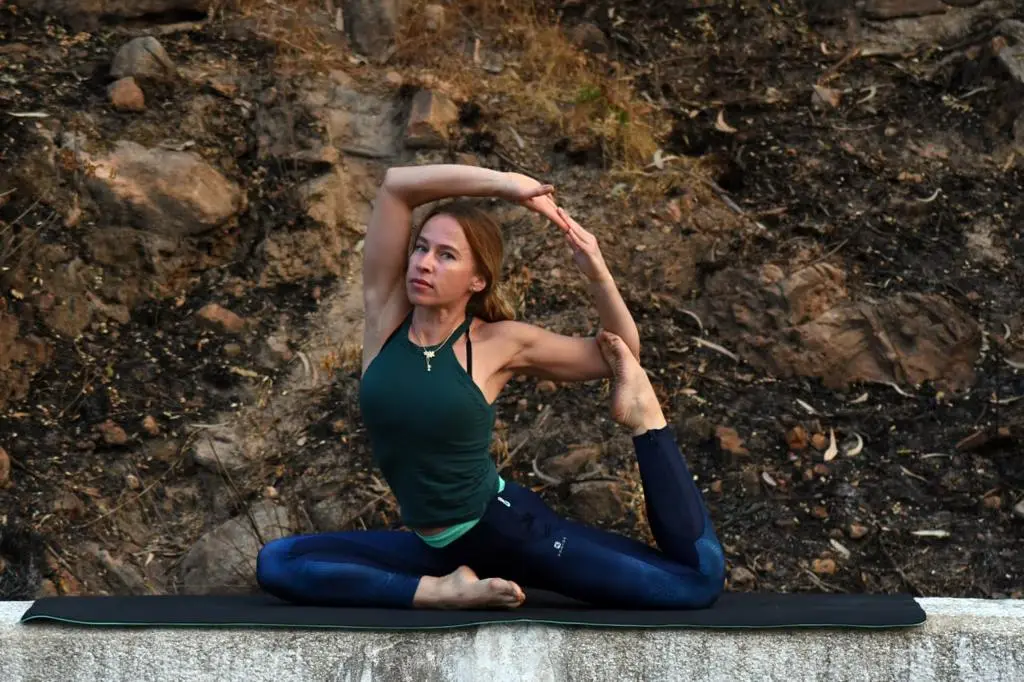
Mysore style Ashtanga is the foundational method through which the Ashtanga system has been taught for generations. It’s structured yet personal, guided yet self directed. The practitioner moves at a pace that matches their capacity while the teacher offers individual instruction. This model preserves the integrity of the lineage and allows the practice to develop as a long term discipline rather than a performance.
This blog outlines what Mysore style means, who it supports, why moondays matter, and how ujjayi breath, bandhas, and drishti form the internal structure of a traditional practice.
Key Takeaways
- Mysore style Ashtanga is the traditional format of the Ashtanga system, students practice individually within a shared space.
- The method supports a Mysore Ashtanga practice that evolves through consistency rather than external instruction.
- Traditional Ashtanga Mysore emphasizes breath, bandhas, and drishti as non-negotiable components of the technique.
- The practice is self paced, it becomes a self paced Ashtanga class where learning is incremental.
- Ujjayi breath, bandhas, and drishti are the core internal mechanisms through which stability and clarity develop.
What does Mysore Style Mean?
Mysore style refers to the original method taught in Mysore under the lineage of Pattabhi Jois. Students enter the room, unroll their mats, and begin the sequence they have learned so far. There’s no group counting and no externally synchronized rhythm. Instead, each practitioner follows their own breath cycle. Teachers move through the room offering adjustments, refining alignment, and introducing new postures when the practitioner is ready. This creates a method that is structured but not rigid, traditional but responsive. The Mysore Ashtanga practice sustains clarity by removing unnecessary variation. It allows the method to function as a progressive system rather than a class format.
Who is Mysore style Ashtanga Yoga right for?
The traditional Ashtanga Mysore format suits practitioners who prefer a long term, methodical approach. Beginners benefit from the individual guidance because the teacher introduces the sequence gradually. Experienced practitioners benefit from the autonomy; they can refine breath, bandhas, and drishti without external pacing. The format supports those who value consistency and incremental growth over novelty. The self paced Ashtanga class model ensures that learning unfolds in relation to one’s capacity. It’s suitable for anyone who prefers structure and clarity without excessive instruction.
What are moondays and why don’t we practice on those days?
Moondays refer to full moon and new moon days in the traditional Ashtanga calendar. Practitioners typically rest on these days. The reason is simple; the body’s internal regulation shifts subtly with lunar phases. Traditional teachers observed that physical vulnerability increases during these periods, joints feel different, energy levels fluctuate. Pausing on moondays supports longevity in practice. The traditional method places equal importance on rest and effort. This pause reinforces the idea that discipline is not measured only by doing but also by knowing when not to practice.
What is Ujjayi breath, bandhas, drishti ?
These three components form the internal architecture of the practice. Every posture and transition incorporates Ujjayi breath, bandhas, and drishti. They act together to stabilize attention and regulate energy. Without them, the movement sequence loses its structural clarity.
Ujjayi Breath
Ujjayi breath is a controlled breath with a slight constriction of the glottis (back of the throat). It produces a soft sound that helps regulate pace and intensity. The breath maintains internal heat and ensures that movement is guided from within rather than from visual cues. In Mysore style Ashtanga, Ujjayi breath becomes the metronome that shapes the entire practice.
Bandhas
Bandhas refer to internal locks, specifically Mula Bandha (lifting and contraction of pelvic floor muscles) and Uddiyana Bandha (upward abdominal lock) in Ashtanga practice. They stabilize the pelvis and support the spine. Bandhas organize internal pressure systems, allowing the practitioner to move with control. In every Mysore Ashtanga practice, bandhas are essential for safety and structural integrity.
Drishti
Drishti is the focal point of the gaze. Each posture has a defined point. This prevents distraction and reduces unnecessary neck movement. Drishti organizes attention, it narrows the field and stabilizes the mind. In a self paced Ashtanga class, drishti anchors the practitioner when external cues are minimal.
Conclusion
The Mysore style Ashtanga method remains the most accurate expression of the Ashtanga lineage. Its structure respects tradition while allowing for personal development. A traditional Ashtanga Mysore setting keeps the practice consistent across generations. It ensures that breath, bandhas, and drishti remain central. A self paced Ashtanga class encourages responsibility, practitioners learn to manage their own rhythm and internal awareness. This system preserves the continuity of the method without diluting its principles.
FAQs
What distinguishes Mysore style from a led class?
Mysore style allows each student to move independently while receiving individual guidance.
Is Mysore style suitable for beginners?
Yes, beginners learn gradually with specific instruction from the teacher.
Why is the practice self paced?
The structure respects individual capacity by avoiding the pressure of group synchronization.
Do breath, bandhas, and drishti change with experience?
They become more refined and they shape the quality of movement and attention.
Why avoid practice on moondays?
Traditional observations note shifts in physical and energetic stability, rest supports longevity in practice.