
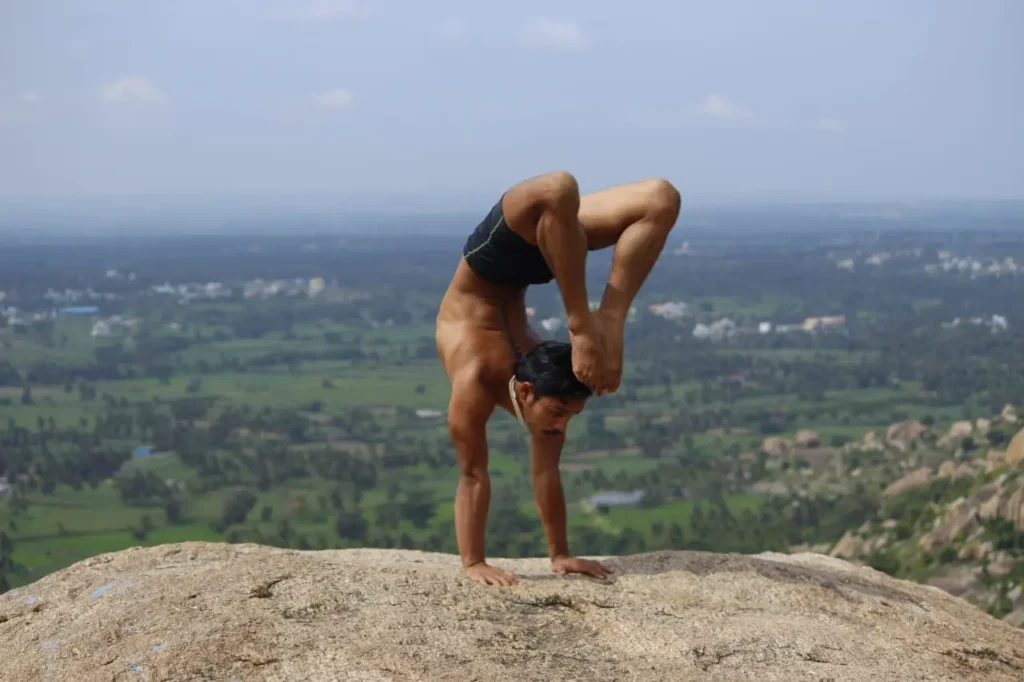
Ashtanga Yoga operates through a defined sequence of postures, each prepares the body for the next. This structure creates continuity and ensures beginners progress with stability. The early section of the Primary Series introduces foundational alignment, breath control, and joint preparation. These elements make the sequence accessible even when strength and flexibility are still developing. The Ashtanga yoga poses selected for beginners are intentional, they build the foundations that support long term practice.
Key Takeaways
- Beginners work with a focused set of Ashtanga yoga poses designed to establish clarity in alignment and breath.
- The beginner Ashtanga poses in the primary series build strength, stability, and respiratory awareness.
- Surya Namaskar Ashtanga prepares the body through controlled movement and steady breath.
- The Ashtanga standing sequence introduces balance, joint organisation, and foundational muscular engagement.
- Each posture deepens capacity when practiced consistently with attention to detail.
Understanding the Foundation of Ashtanga for Beginners
Ashtanga begins with repetition, beginners return to the same set of postures until the body internalises their structure. This repetition is not rigid, it creates familiarity so the practitioner can sense subtle changes in strength, breath, and stability. The early part of the primary series Ashtanga emphasises simple patterns that gradually build complexity. Breath becomes the organising force and movement follows its rhythm. This approach ensures beginners engage safely while developing the awareness required for the rest of the system.
Core Beginner Ashtanga Poses and How to Approach Them
Surya Namaskar A and B
Surya Namaskar Ashtanga forms the entry point to the practice. These sequences regulate breath, elevate internal heat, and prepare the spine for deeper movement. Mastery comes from refining transitions; the jump back, step back, or controlled lowering into chaturanga builds upper body strength. Breath ratio remains consistent; one movement per breath. Beginners focus on smooth pacing and structural accuracy rather than intensity.
Padangusthasana and Padahastasana
These two forward bends in the primary series Ashtanga introduce lengthening of the posterior chain. Padangusthasana uses the toes as an anchor point and Padahastasana deepens the fold by placing the hands under the feet. Both require stability in the legs and controlled engagement of the abdominal muscles. Progress appears as increased fold depth, steadier breath, and reduced strain in the lower back.
Trikonasana and Parivrtta Trikonasana
These standing postures within the Ashtanga standing sequence promote lateral expansion and rotational control. Trikonasana improves hip stability and shoulder alignment, while the revolved variation strengthens core engagement and tests balance. Beginners learn to place the feet deliberately and maintain a steady gaze. Mastery involves coordinated breath, inhalation expands the chest, and exhalation anchors the legs.
Parsvakonasana and Parivrtta Parsvakonasana
These postures build leg strength and integrate spinal rotation. Parsvakonasana lengthens the side body while stabilising the pelvis. In the revolved variation, the twist becomes deeper and core engagement and controlled breath are essential. These poses strengthen the foundations required for more advanced rotational work later in the series.
Prasarita Padottanasana A to D
These wide leg forward folds combine balance, spinal lengthening, and upper body engagement. Each variation offers a different focus; from grounding through the legs to engaging the shoulders. Breath widens the back body and supports the release of tension. These postures belong to the beginner Ashtanga pose set because they improve both strength and mobility across multiple muscle groups.
How Beginners Can Progress with Ashtanga Yoga Poses
Beginners develop mastery through refinement. A simple posture becomes more integrated when breath, gaze, and alignment work together. This is the principle underlying the Ashtanga yoga poses in the Primary Series. Consistency builds familiarity and familiarity builds confidence. Teachers introduce new postures only when earlier ones feel stable, this ensures progression is measured and sustainable. The Ashtanga standing sequence becomes the framework through which beginners organise their physical and mental focus.
Conclusion
The early Ashtanga yoga poses form a system of preparation. They strengthen, lengthen, and regulate the body so practitioners can approach the full primary series with confidence. The beginner Ashtanga poses are intentionally simple but structurally important, as they train breath, alignment, and endurance. Whether through Surya Namaskar Ashtanga or the broader Ashtanga standing sequence, beginners learn to move with clarity and discipline. This foundation defines long term progression within the practice.
FAQs
What makes Ashtanga suitable for beginners?
The structured sequence supports gradual development and prevents overexertion.
How often should beginners practice?
Regular practice, even three to four days a week, helps integrate postures effectively.
Do beginners need flexibility before starting?
No. Flexibility develops progressively through the primary series.
Why is breath so important?
Breath regulates movement and stabilises attention across all Ashtanga yoga poses.
When do beginners move beyond the standing sequence?
Once alignment, breath, and stability feel consistent across the core postures.