
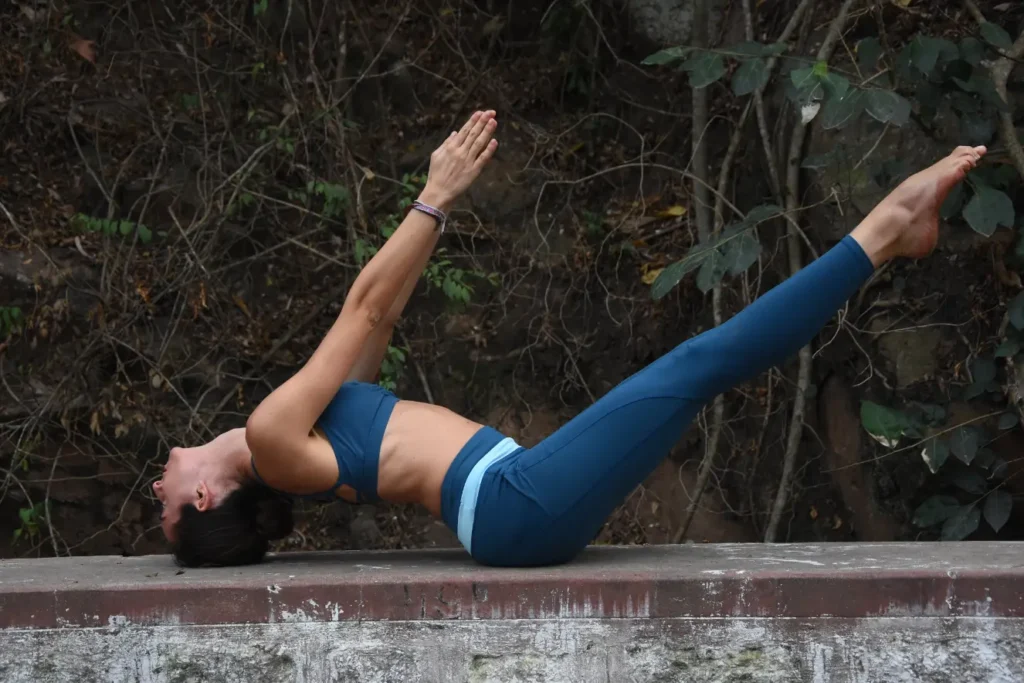
Yoga originated as a disciplined study of mind, breath, and behaviour. Its purpose was to establish steadiness in both the internal and external world. Classical texts describe it as a method for refining perception and regulating tendencies that create instability. Over time, different schools shaped their own interpretations, yet the core idea remained consistent; practice becomes a tool for clarity. Within this broader prospect, Ashtanga Yoga developed as a system shaped by history, observation, and disciplined refinement. Its structure is deliberate, every component exists to create continuity between body, breath, and attention. The Ashtanga yoga philosophy is rooted in measurable processes and built on texts, teachers, and practice that adapts only where necessary and remains exact where precision matters.
Key Takeaways
- The Ashtanga yoga philosophy originates from Patanjali’s Sutras and reflects a method built on structure and internal progression.
- The Ashtanga yoga history spans ancient textual references, traditional Mysore teaching, and the refinement of the Pattabhi Jois Ashtanga lineage.
- The eight limb framework defines behavioural, physical, and cognitive practice fields that operate together.
- Ashtanga emphasizes consistency, technical clarity, and sustained attention.
- Benefits emerge through process oriented repetition rather than variation.
What is Ashtanga Yoga?
Ashtanga Yoga is a method that organizes movement, breath, and attention into a structured sequence. Each posture uses vinyasa; each vinyasa is tied to a counted breath. This creates a continuous line through the practice. It relies on repetition that gradually refines alignment, breath capacity, and internal steadiness. The Ashtanga yoga philosophy treats this structure as a training where clarity grows through routine and observation.
History of Ashtanga Yoga
The Ashtanga yoga history references early textual sources like the Yoga Korunta, attributed to Vamana Rishi, which described vinyasa based sequencing and dynamic transitions. Although the physical text is no longer available, its ideas were preserved through oral transmission. In the twentieth century, Krishnamacharya studied these teachings, formalized the sequencing system, and taught it in Mysore. One of his primary students, K Pattabhi Jois, continued this line of teaching and developed the Pattabhi Jois Ashtanga method that became the global standard. This evolution did not depart from classical frameworks, instead, it organized them into an accessible progression rooted in Patanjali’s established principles.
Eight Limbs of Ashtanga Yoga
The eight limb system articulated in Patanjali’s Sutras forms the core of the Ashtanga yoga philosophy. Each limb serves a distinct purpose, yet, they function as a comprehensive map for behavioural clarity, physical training, and cognitive refinement.
Yama (Principles or moral code)
Yama defines behavioural boundaries that regulate how individuals interact with their environment. Principles such as non-harm, honesty, measured consumption, and steadiness of intention operate as practical guidelines. Within the Ashtanga yoga principles, Yama provides a disciplined baseline for decision making that supports stability in practice.
Niyama (Personal Disciplines)
Niyama shifts the lens inward to personal discipline. Cleanliness, contentment, persistence, reflective study, and orientation toward a higher principle create internal order. These practices maintain coherence when external conditions fluctuate, they reinforce the consistency required for long term Ashtanga practice.
Asana (Yoga Positions)
Asana builds physical endurance, joint stability, and structural balance. In Ashtanga, asanas follow a fixed sequence, this removes the variable of choice and directs attention toward precision. Over time, repetition helps in subtle alignment details and functional movement patterns. This approach emphasizes clarity of execution over variety.
Pranayama (Yogic Breathing)
Pranayama structures the breath using controlled ratios and intentional pacing. The aim is progressive regulation; once breath becomes steady, internal fluctuations reduce. Ashtanga traditionally introduces pranayama only after a foundation in asana is established, ensuring the breath can be trained without strain or instability.
Pratyahara (Withdrawal of Senses)
Pratyahara reduces unnecessary sensory engagement. It’s not withdrawal for the sake of detachment, it’s a method for limiting external interruptions so the mind can stabilize. Over time, practitioners become less reactive to sensory shifts and more capable of sustaining focus.
Dharana (Concentration on Object)
Dharana is deliberate concentration on a single point. It trains the practitioner to recognize distraction without amplifying it. The exercise is simple but not easy, it develops cognitive endurance and the capacity to remain with a chosen object of focus.
Dhyan (Meditation)
Dhyan arises when concentration becomes continuous. Effort becomes more streamlined, attention extends without fragmentation. Observation deepens, and the practitioner experiences steadiness without the interruptions present in Dharana.
Samadhi (Salvation)
Samadhi represents complete absorption. Distinctions between observer and object diminish and the experience becomes unified. In traditional descriptions, this state reflects clarity without distortion. Within Ashtanga yoga philosophy, Samadhi is the natural extension of consistent engagement with the prior limbs.
Benefits of Ashtanga Yoga
The benefits of Ashtanga Yoga develop gradually. Physical conditioning improves through repeated sequencing; muscular endurance increases, breath mechanics become more efficient. Cognitive benefits emerge from the continuity of attention required in practice. Emotional steadiness grows when reactivity decreases through breath linked movement. The system’s impact is cumulative; results reflect time spent within its structure rather than intensity of effort on isolated days. This aligns with the Ashtanga yoga philosophy, which emphasizes sustained progression rather than quick adaptation.
Conclusion
Ashtanga Yoga is a method built on lineage, structure, and clarity. Its Ashtanga yoga history and textual foundation inform a practice that is neither ornamental nor improvisational. Through the eight limb framework, practitioners develop behavioural precision, physical stability, and cognitive refinement. The Pattabhi Jois Ashtanga lineage maintains this continuity, and the Ashtanga yoga principles ensure the system remains consistent across generations.
FAQs
What distinguishes Ashtanga from other yoga systems?
Ashtanga uses fixed sequences and breath counting to maintain precision and continuity across practitioners.
Is Ashtanga suitable for beginners?
Yes, beginners start with foundational postures and learn at a pace that maintains structural integrity.
How often should someone practice Ashtanga?
Traditionally six days a week with one rest day. frequency may shift depending on capacity and guidance.
Why is breath emphasized so strongly?
Breath creates a stable internal rhythm that regulates effort, supports concentration, and keeps the practice consistent.
How does philosophy integrate with physical practice?
Philosophy defines intention, while physical practice applies that intention through structure, repetition, and observation.